Insulation of cold lines
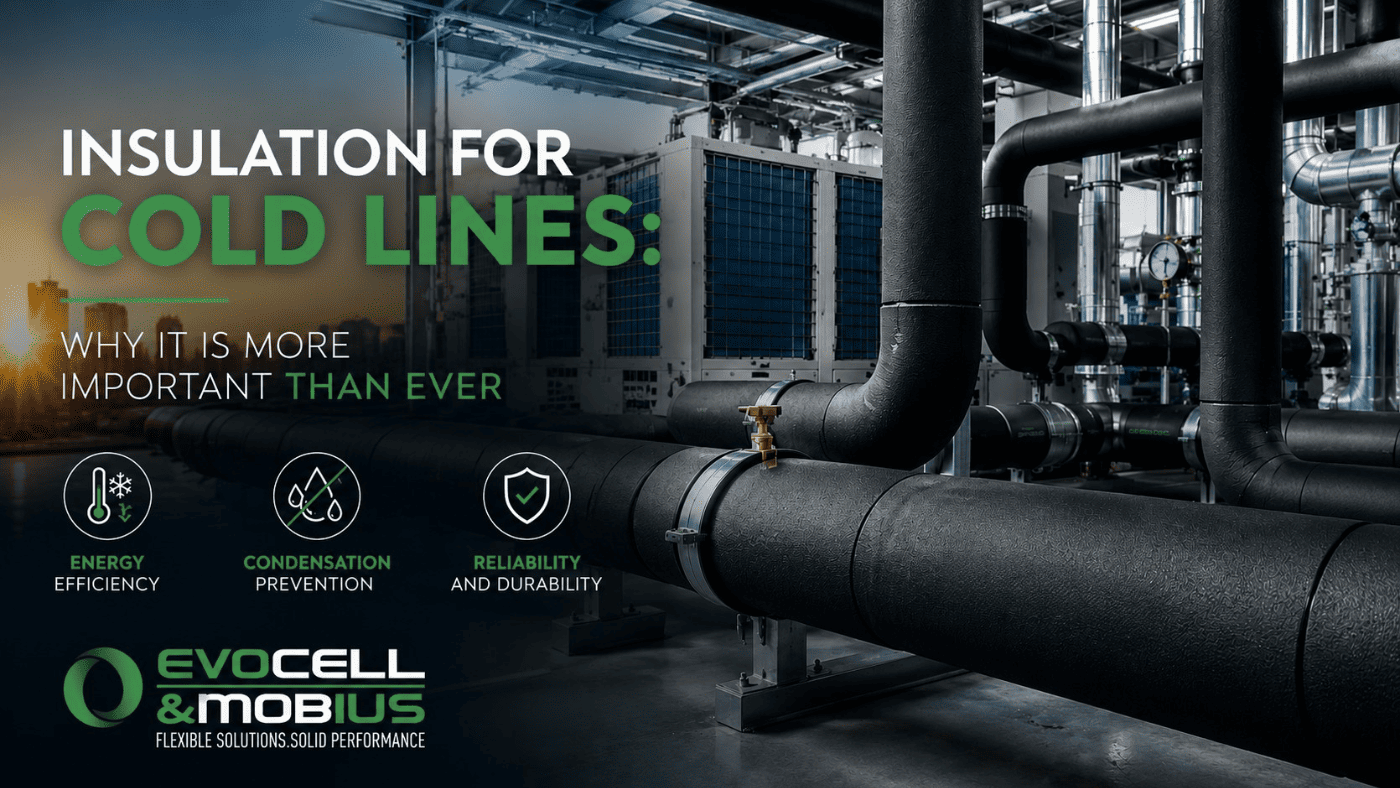
Cold Line Insulation: Why It's More Important Today Than Ever
Rising summer temperatures, growing demand for cooling and energy costs make properly designed insulation essential.
In recent years, building cooling has become a major focus of system design. Rising average temperatures, the greater frequency of heat waves, and the growing prevalence of air conditioning systems are changing the way buildings are designed and energy consumption is managed.
According to the International Energy Agency (IEA) , global demand for electricity for cooling continues to grow rapidly and will be a major driver of energy consumption growth in the coming years. By 2035, energy demand for cooling alone could increase by approximately 1,600 TWh , a value comparable to the current annual electricity consumption of Japan and South Korea combined.
The phenomenon is increasingly evident in Europe too. Heat waves recorded in recent years are driving an increase in demand for cooling in residential, commercial, and industrial buildings, with a growing impact on electricity consumption and system design.
In this scenario, lines carrying chilled water or other low-temperature fluids operate for increasingly longer periods and under more severe environmental conditions. Higher external temperatures and increased humidity increase the risk of condensation and energy loss, making cold line insulation an increasingly strategic element for ensuring system efficiency, reliability, and longevity.
Today, designing an efficient system does not only mean choosing high-performance machines, but also ensuring that each component contributes to limiting energy losses and preserving performance over time.
An improperly insulated cold line can compromise the efficiency of the entire system, increase energy consumption, and generate problems that require extraordinary maintenance interventions during the useful life of the installation.
The consequences are therefore not limited to the loss of thermal performance, but can directly affect the reliability of the system and management costs.
The main consequences of incorrect insulation:
1. Higher energy consumption
Each heat loss represents energy that the refrigeration system must compensate for.
When a pipe passes through hot environments without adequate insulation, the refrigerated fluid absorbs heat from the outside. Consequently, the refrigeration generator is forced to work longer to maintain the design temperature, increasing energy consumption and operating costs.
In high-use buildings such as hospitals, hotels, shopping centers, factories, or data centers, even small leaks spread across hundreds of meters of piping can result in a significant increase in energy demand.
2. Formation of condensation
Condensation is one of the most common problems in air conditioning and refrigeration systems.
When the surface temperature of the insulation drops below the dew point of the ambient air, the water vapor in the air turns into water, depositing on the surface of the pipe.
The result can be immediately visible:
- continuous dripping;
- damp spots;
- deterioration of false ceilings;
- damage to finishes;
- mold formation in environments.
As summer temperatures and relative humidity rise, the risk of condensation becomes even higher, making the choice of a properly designed insulation system essential.
3. Corrosion Under Insulation (CUI)
Humidity is not just an aesthetic problem.
If water vapor manages to penetrate inside the insulation material and reaches the metal surface of the pipe, it can trigger Corrosion Under Insulation ( CUI) phenomena.
CUI is particularly critical because it develops invisibly, not immediately visible during normal maintenance. Over time, it can compromise the integrity of the pipeline, requiring complex and costly repairs.
For this reason, in addition to thermal conductivity, it is also essential to evaluate the insulating material's ability to resist the diffusion of water vapor.
4. Increased maintenance and reduction of the useful life of the system
Ineffective insulation tends to deteriorate more quickly and may require frequent maintenance or replacement.
In addition to direct costs related to materials and labor, potential service interruptions must also be considered, which are particularly critical in facilities where operational continuity is essential, such as hospitals, data centers, or industrial plants.
Investing in properly designed insulation therefore means reducing maintenance interventions, preserving the system's performance and helping to contain its operating costs throughout its life cycle.
The real cost isn't the insulation. It's what happens when the insulation doesn't perform its function properly.
A properly designed insulation system not only protects the piping, but also helps maintain consistent system performance, limit energy consumption, and prevent problems that can become very costly over time.
Today, in a context characterized by increasingly hotter summers, greater use of cooling systems, and growing attention to energy efficiency, choosing the right insulation means investing in the reliability and durability of the entire system.
How to choose effective insulation for cold lines
The effectiveness of an insulation system does not depend solely on the thickness of the material, but on its technical characteristics and the correct design of the application.
To ensure reliable performance over time, it is essential to evaluate various parameters, including fluid temperature, environmental conditions, relative humidity, pipe diameter, and insulation material performance.
In particular, in cold line applications they play a key role:
- low thermal conductivity (λ) , to limit energy losses;
- high resistance to the diffusion of water vapour (μ) , to counteract the formation of condensation;
- closed cell structure , which helps maintain the insulation's performance over time;
- correct sizing of the thickness , based on the actual operating conditions.
Properly designed insulation not only improves the energy efficiency of the system, but also helps reduce maintenance costs, preserve the life of the pipes and ensure reliable operation even in the most severe climatic conditions.
With ever-rising summer temperatures and a growing demand for cooling, cold line insulation is no longer a simple addition to the system, but a strategic design choice to improve its efficiency, reliability, and longevity.
Are you designing an air conditioning or refrigeration system?
The EVOCELL&MOBIUS technical team is available to help you choose the insulation solution best suited to your system's characteristics, providing technical documentation, certifications, and specialized advice.
Write to